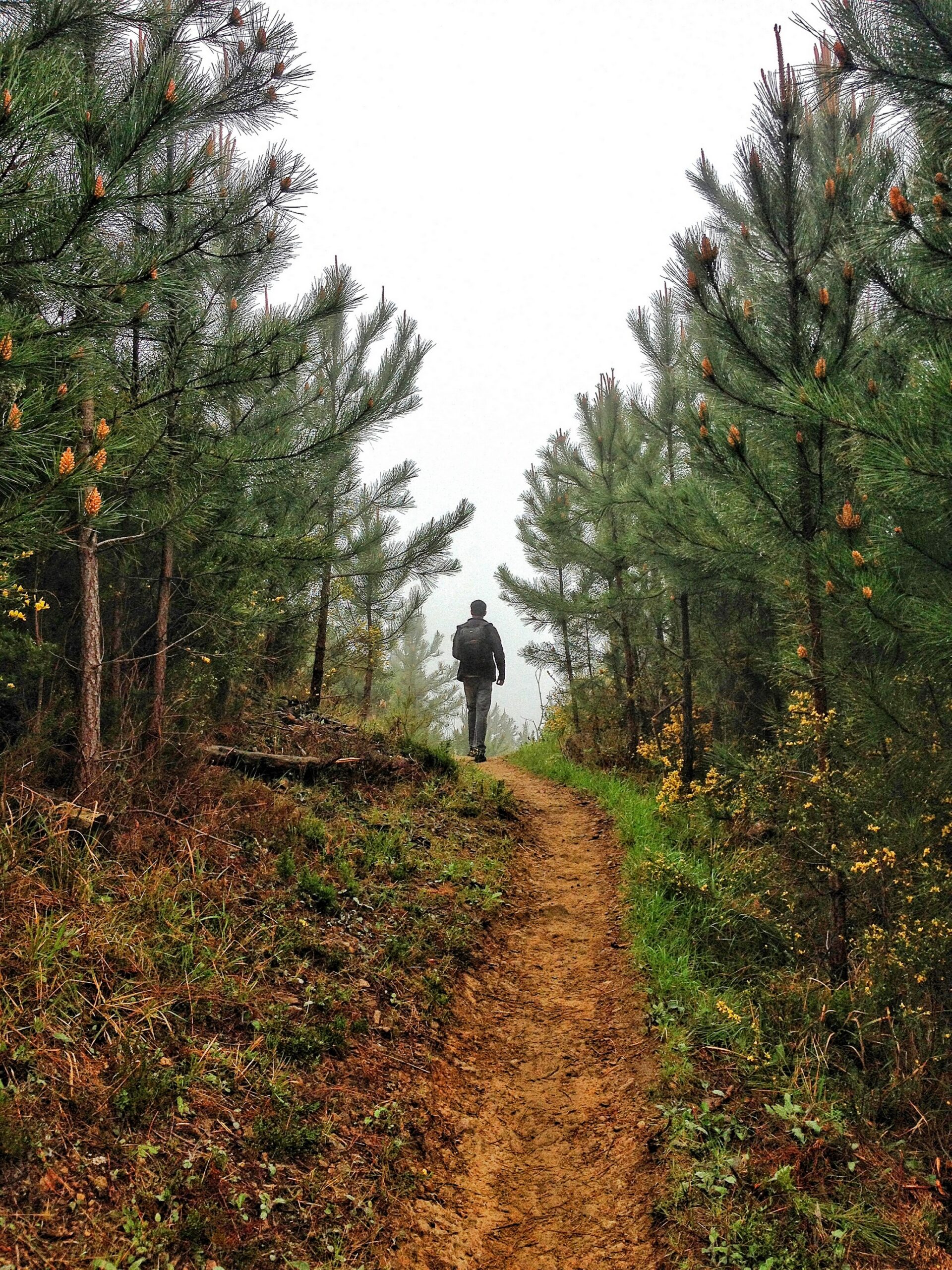

Introduction to Uncertainty
Uncertainty is one of those experiences in life that seems to follow us wherever we go. The people involved change. Yet the experience itself remains surprisingly familiar.
At some point we find ourselves waiting, wondering, searching for answers, or trying to work out what will happen next in a particular situation.
We feel the tension of not knowing.
Over time, I have come to see that uncertainty plays a much bigger role in our lives than most of us realise. It can influence our relationships, our decisions, our worries and our sense of wellbeing.
What makes uncertainty so challenging is that we often experience its effects without recognising it for what it is. Instead, we find ourselves worrying, overthinking, feeling overwhelmed, seeking reassurance or trying to predict the future.
Simply recognising uncertainty can be surprisingly helpful.
Once we have a name for what is happening, we can begin to relate to it differently. Rather than becoming lost in the story, we can recognise the experience beneath it.
I don’t know right now as the future has not happened yet.
The challenge is not that uncertainty exists. The challenge is how we respond to it.
Learning a different relationship with uncertainty has the potential to change not only how we think, but how quickly we return to peace of mind when life becomes uncertain.
Uncertainty And Whet It Becomes Personal
Many of us know what it feels like to be uncertain in a relationship.
Perhaps a message feels different.
Perhaps somebody seems distant.
Perhaps a conversation leaves us wondering where we stand.
Almost immediately the mind starts trying to fill in the gaps and starts scanning for answers.
What did they mean?
Have I done something wrong?
Do they still care about me?
Relationships often bring this pattern into sharp focus, but the same process appears in many areas of life. We become uncertain about work, finances, health, family or the future itself.
The details change. The experience remains the same. We do not know.
The more important the outcome feels, the stronger the tension can become.
We care.
We are invested.
We want connection, security, acceptance, success or safety.
Uncertainty begins to feel personal rather than part of life.
Uncertainty And The Search for Answers
When uncertainty appears, the mind naturally starts searching for understanding.
We want to know what is happening.
We want to know what comes next.
We want to know how things will turn out.
Underneath this search there is often a fear.
What if I am rejected?
What if I fail?
What if I lose something important?
What if I can’t cope?
The uncertainty quickly becomes attached to a story about the future.
The mind then tries to solve that story.
This is often where worry begins. For many people this eventually shows up as anxiety.
Worry can feel productive because it creates the impression that we are doing something useful. In reality, worry is often an attempt to solve a future that has not yet happened. This is closely related to overthinking, where the mind keeps searching for clarity long after useful thinking has ended.
At the same time, the nervous system is seeking safety and certainty. The situation feels unresolved, so the mind keeps searching for answers, replaying possibilities and looking for reassurance.
The more uncertain we feel, the more we think. The more we think, the more attention we give to the uncertainty. A shift often begins when we acknowledge a simple truth is “I don’t know right know.”
Rather than continuing the search, we recognise that the answer may not yet be available as the future has not yet revealed its self.
So What Can I Do?
One of the most useful questions we can ask is:
“What can I actually do right now?”
When uncertainty appears, it is often helpful to identify the fear beneath it.
What is the worst realistic outcome?
Once we can see the fear clearly, we can begin taking practical steps to reduce the risk of that outcome where possible. Sometimes that means gathering information. Sometimes it means making a plan. Sometimes it means asking for support or preparing for possible challenges. Sharing our worries with someone we trust can also lighten the load.
The important thing is movement. Action creates movement. In many situations, the feeling of being stuck is less about the situation itself and more about becoming frozen by uncertainty. The longer we remain inactive, the more space there is for worry and fear to grow.
Even small steps can help us move forward.
This does not guarantee a particular outcome, but it often reduces the feeling of being frozen by uncertainty. We are no longer simply worrying about the future.
We are actively responding to the present.
This often brings genuine peace of mind. Not because the future is now certain, but because we know we have responded as well as we can. We have done our part.
Life will do the rest.
A Different Response
Over time we may discover that uncertainty itself is not the real problem. The real problem is often our struggle against it, or our need to control what cannot yet be controlled.
We want certainty where certainty cannot yet exist.
We want answers before life has revealed them.
We want reassurance about a future that has not happened.
Yet uncertainty is woven into the fabric of life. No matter how carefully we plan, there will always be things we cannot know in advance. The solution is not learning how to predict the future. The solution is learning how to live well without needing to know everything.
We cannot know everything.
We do not need to know everything.
We can learn to trust ourselves to meet life when it arrives.
And perhaps that is where peace of mind begins. Not when uncertainty disappears. But when we stop demanding that it does.
Much of our suffering comes from trying to control what can only be met when it arrives.
Practical Reminders
It can be helpful to find a simple reminder that releases some of the weight uncertainty creates.
For example:
I don’t need to carry this.
I don’t need to solve this right now.
I have done what I can and now I can let go of the result.
I will deal with what comes next when it arrives.
Most of us do not need perfect certainty. We simply need enough reassurance to take the next step.With practice, uncertainty may still create a spark of worry, but the fire does not burn for as long.
We notice it sooner We return to centre more quickly We recover more quickly.
A Simple Reminder
Something Feels Uncertain → The Mind Searches for Answers → Worry Grows → Take Practical Action → Accept What Cannot Yet Be Known → Return to the Present
Life is simply uncertain.
The question is not whether uncertainty will appear.
The question is whether we can meet it with awareness, practical action and a little more trust. And when we find ourselves lost in the future, we can return to the present – the one place where we can actually do something.
If this resonates and you would like support on your journey or with your next step, please feel free to reach out.